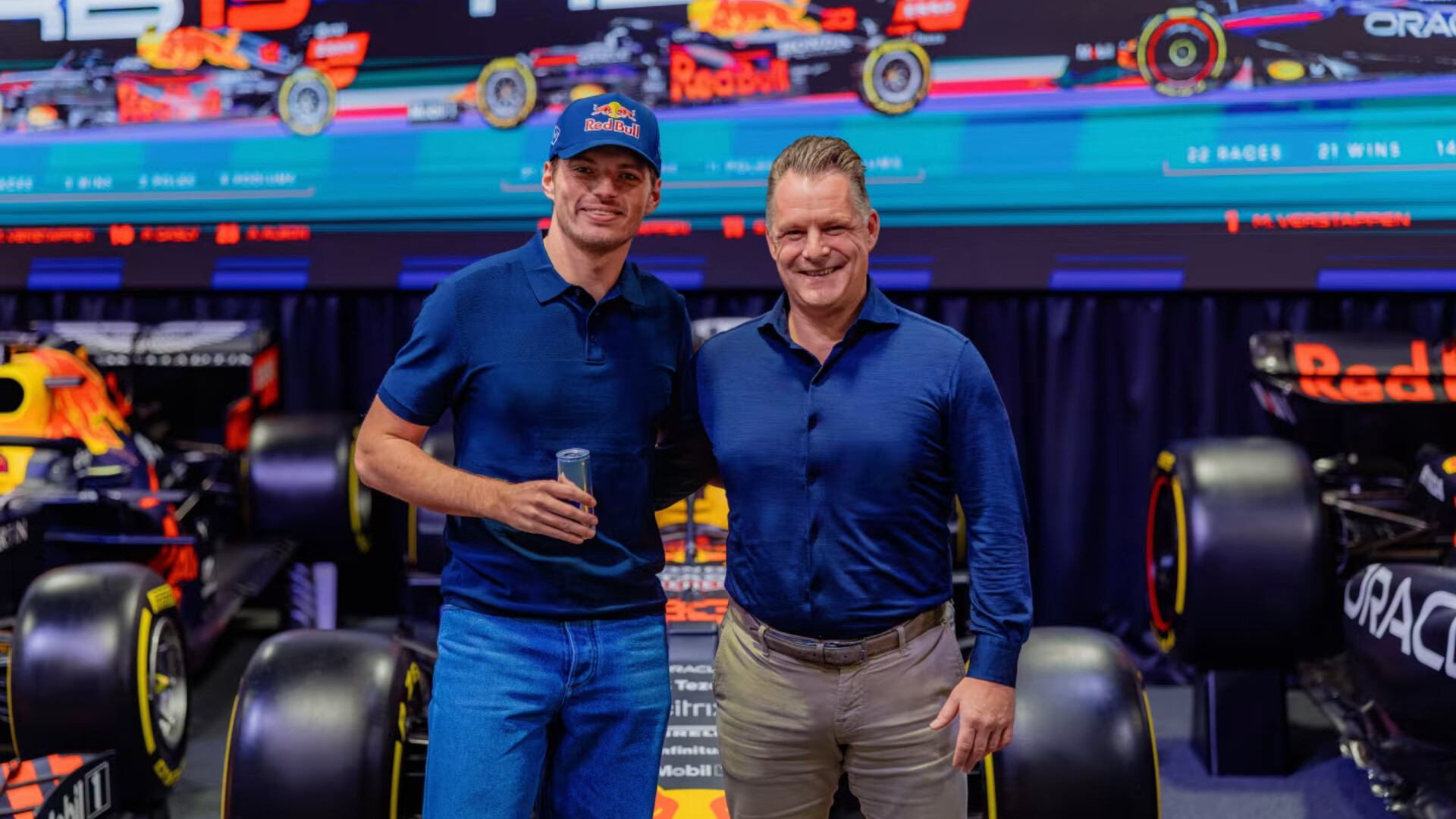
VDK Groep has not appointed Max Verstappen simply to make an engineering company more famous. Its own announcement defines four separate commercial audiences for the new ambassador: technical talent, customers, entrepreneurs considering joining the group and business partners.
That makes the multi-year relationship a useful case study in how motorsport fame can support a buy-and-build strategy beyond conventional race sponsorship.
VDK is a fast-growing group of installation and technical-services businesses operating across the Netherlands, Germany, Belgium, Sweden, Austria and Switzerland. It acquires and combines locally established companies while allowing their management and brands to retain operating independence.
The company says Verstappen will appear in communications and activations over the coming years as the face of its international positioning. It does not describe a Formula 1 team sponsorship, car branding or a link to Red Bull Racing's commercial inventory. The confirmed asset is a corporate ambassador agreement between VDK and Verstappen.
For teams, agencies and B2B sponsors, the distinction is important. VDK is buying access to the athlete's recognition and associations, then applying them to recruitment, customer development and corporate acquisition. The return will be created in those funnels rather than in television exposure from a logo on a race car.
A campaign built around the scale problem
VDK was founded in 2013 and has expanded rapidly through acquisitions. The group's February 2026 announcement for the completion of its Builtech purchase described more than 150 local companies, approximately 7,500 employees and annual revenue above €2 billion.
By July, VDK said it had more than 175 companies and 8,300 employees. Independent Dutch trade publication Installatie.nl reported on 14 November that the network had reached 195 businesses, approximately 8,500 employees and €2.4 billion in revenue. It also reported founder and chief executive Frans van der Kolk's ambition to grow to €5 billion in international revenue.
Those figures come from different dates and should not be treated as one fixed reporting period. Their direction is nevertheless clear: the organisation is adding companies and people quickly, and it needs a corporate identity capable of travelling across a fragmented group.
That is the first job for the ambassador campaign. An acquired local installer may be well known in its home market while the VDK name remains unfamiliar to employees, customers or business owners elsewhere. Verstappen provides an immediately recognisable reference point that can introduce the parent group without requiring every operating company to abandon its local identity.
The model is similar to a motorsport team using a driver as the human face of a complex supplier network. VDK sells electrical engineering, climate systems, security, information technology, infrastructure technology and building intelligence through many specialist businesses. A single athlete gives that portfolio a common story around technical skill, teamwork and continual improvement.
The risk is that recognition stops at the celebrity. If audiences remember Verstappen but cannot explain what VDK does, which local business serves them or how to apply for a job, the campaign will generate awareness without enough commercial movement. Every activation therefore needs a direct route into a regional operating company or group-level conversion process.
Recruitment is a commercial requirement
VDK's market depends on skilled technical labour. Its own acquisition material identifies staff availability as a constraint on delivering building decarbonisation, industrial modernisation and infrastructure projects. The German skilled-trades market also faces a large succession challenge as owners approach retirement.
The ambassador agreement addresses both sides of that problem. Verstappen can make technical careers more visible to younger applicants, while VDK can present its scale and network as an attractive home for experienced specialists and company owners seeking a succession partner.
Those are different audiences and should not share one generic campaign. A technician needs evidence about roles, training, pay, travel, projects and career progression. An owner considering a sale needs information about valuation, governance, brand continuity, management autonomy and the treatment of employees. A customer needs proof of delivery capacity and local accountability.
Motorsport imagery can open the door, but the landing pages, events and sales teams behind it must separate those journeys.
Useful recruitment measures include qualified applications, cost per applicant, acceptance rate, retention and the proportion of candidates who first encountered VDK through ambassador content. Raw video views or social reach are weaker indicators because they do not show whether the campaign is helping fill technical roles.
For acquisition sourcing, VDK should track introductions to business owners, meetings generated, signed letters of intent and completed transactions influenced by the campaign. That attribution will be harder, because a company sale has a long decision cycle and multiple advisers, but it is closer to the strategic objective than media impressions alone.
Verstappen adds to an existing ambassador system
Former Formula 1 driver Robert Doornbos is staying with VDK after two years of recruitment campaigns, customer events and relationship activity. The company says he also played a role in establishing the Verstappen agreement.
That continuity gives VDK two different levels of ambassador inventory. Verstappen supplies exceptional international awareness and campaign reach. Doornbos can continue the speaking, event and relationship work that requires more time and direct access.
This layered model is often more practical than expecting one headline athlete to perform every commercial task. A global figure can draw attention, while another ambassador, executive or technical expert converts that attention through workshops, customer meetings, recruitment events and internal appearances.
The contracts and campaign plan should make those roles explicit. Otherwise, overlapping ambassador claims can create confusion over appearances, content approvals, territories and which person supports which audience.
VDK has not disclosed the fee, exact contract length, number of appearances, image-rights territory, content commitments, exclusivity or performance targets. It has also not said whether operating companies can use Verstappen independently or only through centrally approved material. MRI has therefore not estimated the deal's financial value or assumed unlimited access to the athlete.
International growth needs local translation
Verstappen's Dutch identity is a strong fit for VDK's origin and home market. The harder task is using that recognition across six countries with different labour markets, languages, customer structures and levels of Formula 1 interest.
A successful international campaign cannot be a Dutch creative asset translated word for word. German business owners may respond to succession and continuity. Swedish recruits may care more about energy-transition projects and working culture. Swiss customers may expect different proof of technical capability and compliance.
The group therefore needs a shared brand system with local control: central rights, photography, messaging and measurement, combined with regional landing pages, events and calls to action. That mirrors VDK's operating model of local entrepreneurship supported by group resources.
It also affects media buying. Verstappen's organic profile can reduce the cost of gaining attention, but VDK still needs targeted distribution to reach technical workers and acquisition prospects rather than only racing fans. Specialist trade media, recruitment platforms, industry events and direct relationship marketing may convert better than broad consumer channels.
For motorsport agencies, this is where the activation budget becomes more important than the announcement. The athlete right creates the creative platform. Research, localisation, content production, paid distribution, event delivery, lead handling and analytics create the commercial system around it.
The buy-and-build logic
VDK's acquisition strategy combines local businesses rather than replacing them with one national operating brand. Its Builtech transaction added scale in Germany, Sweden, Austria and Switzerland, while later purchases continued to deepen regional coverage.
That structure creates a recurring communications challenge. Every acquisition adds employees, customers and suppliers who need to understand the wider group, but the value of the acquired company may depend on preserving its local reputation.
Verstappen offers a bridge between those levels. VDK can use him to give the parent organisation visibility while keeping the acquired company's name at the point of service. In internal communications, the partnership can signal that a local employer belongs to a larger, ambitious technical network.
The approach also gives owners considering a sale a visible representation of VDK's scale and confidence. That does not replace financial terms or due diligence, but it can put the group into the initial consideration set when succession discussions begin.
The €5 billion ambition reported by Installatie.nl makes this more than an image exercise. If VDK wants roughly to double revenue, it will need continued acquisitions, integration capacity, skilled labour and customer confidence. The ambassador campaign touches all four, but only if the commercial teams convert awareness into action.
What the motorsport industry can learn
The agreement shows why B2B companies increasingly buy athlete and motorsport rights even when they do not sell a consumer product.
First, technical labour is a market. Engineering, construction, energy and manufacturing groups compete for people who may already follow Formula 1 and recognise its performance culture.
Second, sponsorship can support corporate development. A campaign may be aimed partly at founders, investors and advisers who can introduce acquisition targets, not only at end customers.
Third, athlete rights can travel across business units more easily than a race-specific logo package. Recruitment, customer hospitality, internal engagement and acquisition outreach can all use the same central story if the agreement permits it.
Fourth, a famous ambassador does not remove the need for specialist activation. Teams and rights agencies should help partners design conversion paths, not stop at content reach. The most valuable proposal may include recruitment events, technical storytelling, executive hospitality and lead attribution rather than additional branding surfaces.
For VDK, a practical scorecard should cover four funnels:
1. technical applicants and hires; 2. qualified customer leads and revenue; 3. acquisition introductions and completed deals; and 4. partner engagement across the six-country network.
Brand awareness should be measured alongside those outcomes, not instead of them. The group can also compare regions and operating companies to see where Verstappen's recognition produces the strongest response.
The public announcement establishes ambition, audiences and a long-term association, but it does not yet publish campaign assets, activation dates or results. The next material evidence will be how VDK deploys Verstappen across recruitment, customer and acquisition programmes — and whether those programmes generate measurable growth.
Until then, the business case is best understood as a brand layer for an expanding technical-services platform. VDK is using motorsport fame to make a complex group easier to recognise. Its success will depend on turning that recognition into people, projects and companies.