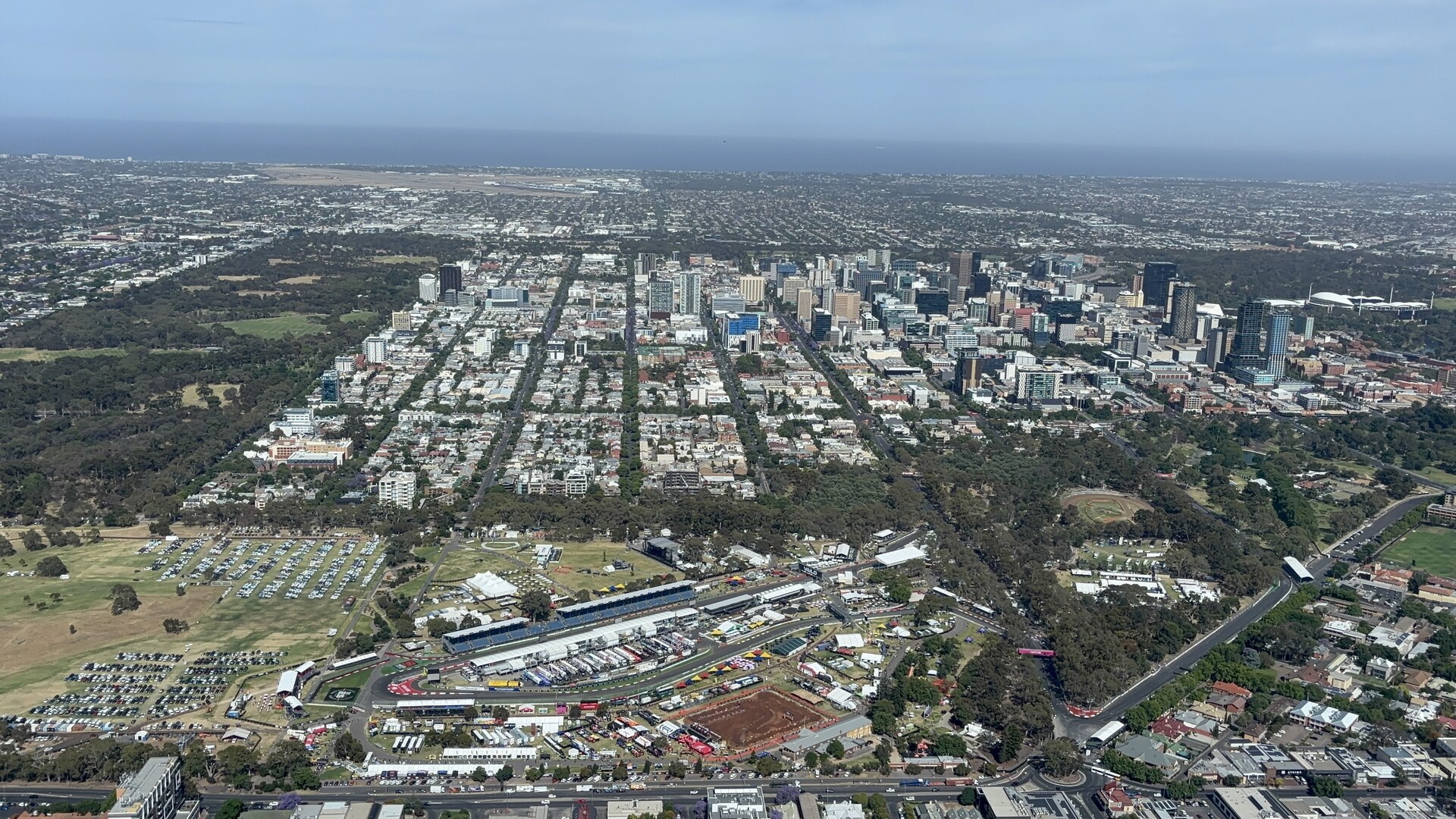
Red Bull will become title sponsor of MotoGP's Australian Grand Prix when the event moves to Adelaide in 2027, giving the new street race a launch partner for its first two editions.
The agreement covers 2027 and 2028. The inaugural Red Bull Grand Prix of Australia – Adelaide is scheduled for 12–14 November 2027, and organisers say the partnership will include fan experiences, entertainment and activations across the city as well as conventional event branding.
That combination is the commercially important part of the announcement. The title rights are not merely a replacement logo on an established race. They sit inside the launch of a new event, a new temporary circuit and a long-term government-backed host programme that runs for six years through 2032, with an option for a further five years.
For promoters, sponsors and suppliers, Adelaide is therefore a useful test of how a title partner can help define an event before its operating habits and audience rituals become fixed.
A two-year sponsor term sits inside a six-year host contract
South Australia's Motor Sport Board says the state has secured the Australian MotoGP round for six years from 2027 to 2032. Red Bull's confirmed title term covers only the first two events.
The difference matters. A host agreement secures the right to stage the event, while a title-sponsorship agreement monetises and activates part of that right. Their time horizons do not have to match, and the shorter commercial term gives both sides an early review point.
For Red Bull, two launch editions provide enough time to create repeatable properties rather than a one-off campaign. For the organiser, the deal supplies a globally recognised consumer brand during the period when the event has the greatest need to establish awareness, ticketing habits, hospitality demand and a recognisable visual identity.
It also leaves four contracted host years beyond the currently announced title term. That creates optionality. Strong delivery could support an extension, a repricing of the rights or a different category strategy after 2028. Weak delivery would allow the parties to change course without disturbing the underlying MotoGP host contract.
No source discloses the rights fee, hospitality inventory, category exclusivity, activation budget, performance clauses or renewal mechanism. Independent reporting describes the arrangement as multimillion-dollar, but no public document provides a precise value. The financial return must therefore be judged through the assets and behaviour the partnership creates, not an invented price.
The circuit is only one part of the product
Adelaide's event will use a 4.13-kilometre, 15-corner temporary circuit based on sections of the city's former Formula 1 layout. The South Australian Department for Infrastructure and Transport is delivering the circuit project, while the Motor Sport Board is responsible for designing and managing the event.
The state has previously identified A$96 million for circuit redevelopment. That public capital programme and the private title-sponsorship agreement are separate propositions. The Red Bull deal should not be described as funding the circuit unless the parties disclose such an arrangement; none of the verified sources does so.
The distinction is important for suppliers. Capital expenditure pays for physical capability: track construction, barriers, pit and paddock infrastructure, services, access and safety systems. Sponsorship pays for commercial rights and may fund activation, content, hospitality and consumer experiences. A contractor bidding for permanent or temporary works is selling into a different budget and approval chain from an agency producing a sponsor activation.
Adelaide will also require the temporary venue to be reconfigured between major event weekends. That creates demand for installation, dismantling, storage, transport, wayfinding, security, accreditation, connectivity and venue-technology services. A title partner can add briefs on top of that base requirement, but it does not eliminate the promoter's delivery risk.
For the sponsor, the temporary circuit offers something a remote permanent venue cannot: proximity to hotels, restaurants, retail, public spaces and existing entertainment districts. Those assets make it possible to build a race-week programme that reaches consumers who do not hold a grandstand ticket.
Title rights provide repeated media inventory
MotoGP's commercial materials position title sponsorship as its highest level of event association. The value comes from repeated use of the branded event name across ticketing, schedules, broadcast references, digital publishing, signage, credentialing and stakeholder communications.
That repetition begins long before the first motorcycle arrives. The 2027 date is already listed in MotoGP's official ticket calendar, giving the branded event a runway for presales, travel packaging and hospitality. Every subsequent operational announcement can carry the title name and reinforce the association.
For a launch event, the naming right can be more valuable than an equivalent sign package at a mature race because the sponsor helps create the initial memory structure. Fans, media and suppliers learn the event under the branded name. If the association is consistent, Red Bull benefits from being treated as part of the event's origin story rather than an advertiser added later.
The risk is that naming exposure becomes the easiest deliverable to count and the least useful one to optimise. Logo impressions say little about whether the partnership sold tickets, built customer data, increased hospitality demand, moved product, supported retailer relationships or created content that travelled outside the race weekend.
The commercial plan needs distinct measures for awareness, participation and conversion. That means separating broadcast mentions from event attendance, activation visitors from identifiable leads, sampling from purchase, and hospitality guests from completed business outcomes.
Adelaide is selling a week, not only a weekend
Organisers say Red Bull will help deliver fan experiences, entertainment and city-wide activation. That language signals an event model designed to occupy the destination rather than remain behind circuit gates.
The model widens the inventory available to the promoter. A title partner can use public fan zones, music, athlete appearances, content studios, retailer programmes, hospitality, transport touchpoints and licensed merchandise. Local businesses can participate through packages that do not require a trackside billboard.
It also widens the operating burden. City activity needs permits, power, security, traffic management, brand approvals, responsible-service procedures, waste management, accessibility and contingency planning. When activations are dispersed, the promoter needs a single command structure and a clear line between sponsor production, event operations and local government responsibilities.
For suppliers, the opportunity is not limited to motorsport specialists. Production companies, fabricators, ticketing platforms, payment providers, experiential agencies, caterers, accommodation partners, transport operators and data-capture vendors can all sit inside the event economy.
The most valuable supplier proposals will connect the city and circuit rather than treat them as separate venues. A hospitality programme that begins in a hotel, moves guests through a branded transport journey and ends in a paddock suite is one product. A fan-zone registration that unlocks race-ticket offers is one customer funnel. Fragmented contracts can still deliver those pieces, but someone must own the data, timing and experience across them.
Launch credibility does not eliminate delivery risk
Red Bull brings credibility in motorcycle sport and event production, but its name cannot compensate for basic failures. The first Adelaide edition must demonstrate that a modern MotoGP street event can operate safely, move large crowds, maintain resident and business access, serve teams and media, and produce reliable broadcast conditions.
Temporary circuits compress construction and testing into a short window. A problem with barriers, surface transitions, drainage, communications, power, access control or recovery routes can affect the sporting timetable and every commercial commitment attached to it.
Promoters should therefore keep the sponsorship critical path connected to the venue critical path. Activation build dates need to respect circuit closures and safety zones. Hospitality sales need confirmed capacities. Sponsor content plans need realistic access windows. Suppliers need escalation routes that work during live operations rather than only during planning meetings.
Teams will judge the event through different measures: freight access, paddock functionality, garage services, personnel movement, accommodation logistics and working hours. A city-centre proposition can be attractive commercially while creating constraints for race operations. The launch plan has to solve both sides.
The same applies to local stakeholders. A successful street race creates visible economic activity, but closures and construction impose costs on businesses and residents. City-wide activation is commercially stronger when local operators can participate and plan around disruption instead of discovering the event through road barriers.
The first two editions need a measurement plan
The two-year title term creates a natural evaluation window. The organiser and sponsor should agree before launch which evidence will determine whether the partnership continues.
Ticket volume and attendance are necessary but incomplete. Useful measures include hospitality yield, sponsor-attributed ticket sales, fan-zone participation, verified audience data, dwell time, retail redemption, accommodation packages, content completion, earned-media quality and the proportion of activation assets that can be reused in 2028.
The measurement architecture affects technology procurement. If different ticketing, accreditation, hospitality, fan-zone and merchandise systems cannot reconcile identities and permissions, the event will generate large headline numbers but weak commercial insight.
Data rights also need to be explicit. The title partner, promoter, championship and ticketing provider may each touch the customer journey. Consent language, data ownership, permitted uses, retention and access after the sponsorship ends should be designed before registrations open.
Sponsors should also distinguish event performance from championship performance. The value of title rights can be influenced by the sporting narrative, weather and calendar position, but the sponsor can control much of the activation quality, content cadence and guest programme. A renewal decision is more useful when those controllable elements are measured separately.
For the promoter, the first edition establishes a baseline and the second should show whether the model is improving. Repeating the same activation is not enough; cost per participant, conversion, satisfaction and operational efficiency should move in the right direction.
A launch partner can shape the event template
The strategic value of Red Bull's early commitment is the ability to influence how the Adelaide event is presented before commercial inventory becomes fixed.
A mature race may have established fan zones, hospitality products, supplier frameworks and media routines that limit what a new partner can change. Adelaide starts with fewer inherited constraints. The title sponsor can help define the tone, content schedule and city footprint, while the organiser can design assets that remain useful to future partners.
That freedom should be governed carefully. The event must retain an identity broader than one sponsor, because the host contract extends beyond the announced title term. Physical infrastructure and digital systems should be capable of rebranding without expensive replacement. Supplier contracts should distinguish reusable event assets from sponsor-specific creative work.
If the first two editions perform, Red Bull will have helped create a property whose value extends beyond logo exposure. If they do not, the host still has four contracted years to revise the commercial model. That is why the mismatch in contract lengths is not a weakness; it is a structured launch phase.
The business lesson is straightforward. A new race does not become commercially mature when a title sponsor signs. The signature creates a platform. Value appears only when rights, city operations, supplier delivery, audience data and renewal evidence are designed as one system.
Adelaide now has a sponsor with the reach to make that system visible. The next task is to make it measurable and repeatable.
Sources and further reading
- MotoGP official title-sponsorship announcement, 12 October 2026 ↗
- Speedcafe independent report, 12 October 2026 ↗
- InDaily independent report, 12 October 2026 ↗
- South Australian Motor Sport Board circuit and host-contract record ↗
- South Australian Department for Infrastructure and Transport circuit-redevelopment record ↗
- MotoGP official sponsorship opportunities ↗
- MotoGP official 2027 ticket calendar ↗
- MotoGP official Adelaide circuit unveiling ↗
- Wikimedia Commons image record ↗