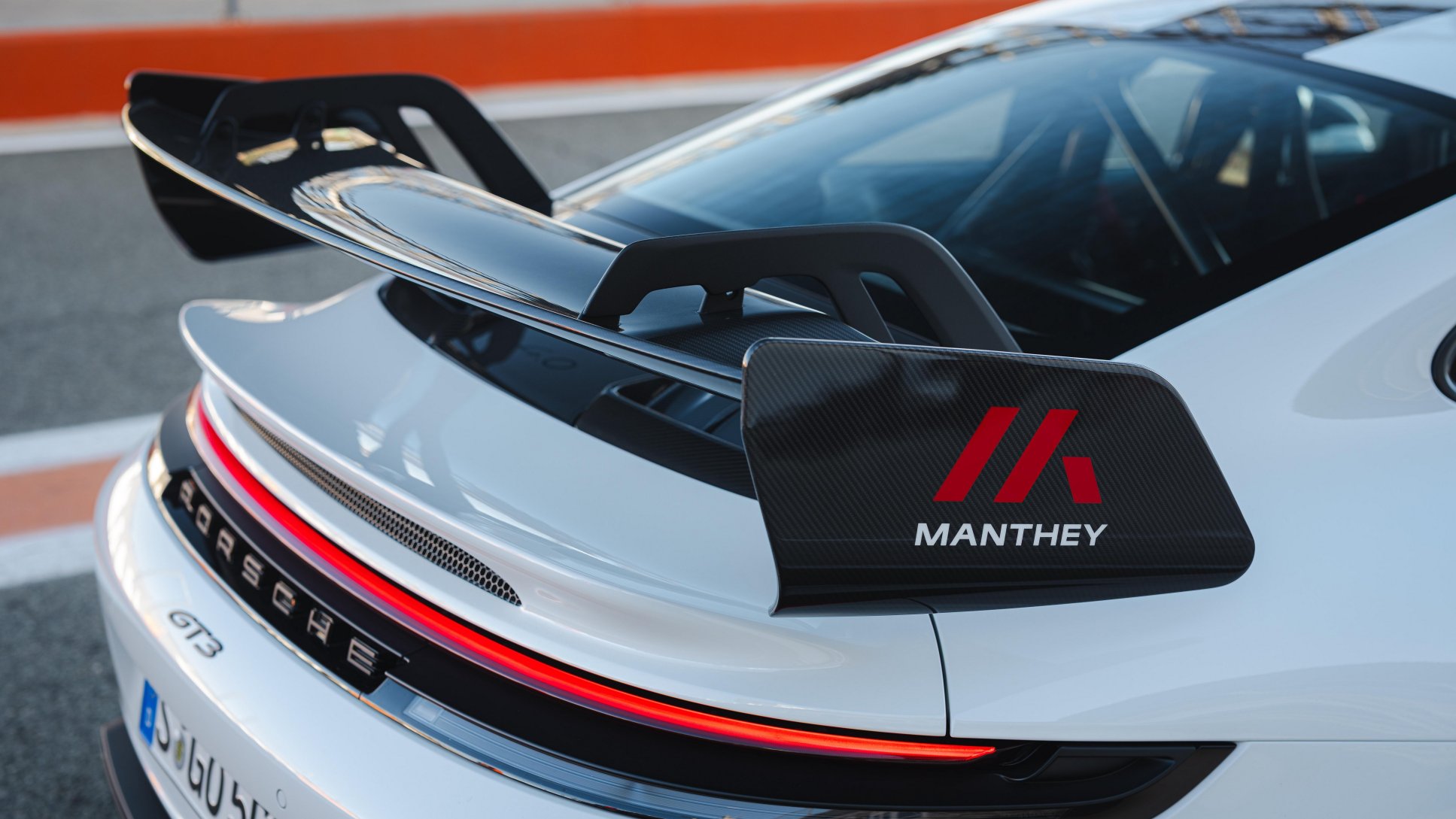
Porsche has increased its stake in Manthey Racing from 51% to 67%, deepening an ownership relationship that now sits inside the manufacturer’s plan to earn more from performance products, limited-run cars and customer experiences.
The 8 October transaction does not create a new controlling shareholder: Porsche already held a majority stake acquired in 2013. Its importance is strategic. Manthey is being placed alongside Sonderwunsch, Exclusive Manufaktur and Porsche’s heritage activities in a new “Home of Sports Cars” structure designed to expand individualisation and raise the value generated by each vehicle.
Porsche has not disclosed the purchase price, valuation, seller or transaction structure. The Wall Street Journal reported that Manthey managing directors Nicolas and Martin Raeder jointly retain the remaining 33%. No change to management, workforce, facilities or race entries has been announced.
For motorsport businesses, the deal is a useful case study in how competition capability can be converted into higher-margin products without separating the racing operation from the road-car proposition. Manthey brings track development, customer-racing credibility and a recognised performance brand. Porsche brings the installed vehicle base, dealer network, approvals system and capital to scale a selective product programme.
Motorsport is being assigned a revenue job
Porsche’s official language is unusually clear about the commercial role expected from Manthey. The companies plan to expand their work beyond Porsche’s own GT models through performance kits, exclusive track experiences and complete vehicle concepts in the “few-off” segment.
Since 2020 they have developed nine Manthey Kits across the 911, 718 and Taycan Turbo GT ranges. Those products show the operating pattern: racing-derived aerodynamics, chassis work and testing are packaged as authorised upgrades for existing customers. A kit can extend revenue after the original vehicle sale, while a track experience can add service and hospitality income without requiring another production car.
The next step is more ambitious. A few-off vehicle is not simply an accessory bundle. It can require design authority, homologation decisions, low-volume component sourcing, traceable assembly, warranty allocation and a sales process suited to a small number of high-value customers. Manthey’s racing and engineering organisation can make that proposition credible, but the commercial result will depend on disciplined execution rather than heritage alone.
Porsche says the first preview of future joint projects will include two special models presented at the Hockenheim DTM finale on 9 October. The ownership announcement does not identify the cars, their production quantities, prices or customer delivery dates. Until those details are disclosed, it is not possible to calculate the revenue opportunity.
The stake increase fits a wider value-over-volume plan
The Manthey move was announced one day after Porsche set out its Sportwagenschmiede ’35 strategy. The company wants a lower break-even point of fewer than 200,000 vehicles, a medium-term operating return on sales of 10% to 15% and an automotive net cash-flow margin of 9% to 12%.
It also plans to lift the average selling price of its top models by about 20%, increase Sonderwunsch sales sixfold and generate significantly more option revenue per vehicle. Against those targets, Manthey is not an isolated motorsport investment. It is one element of a portfolio intended to make each customer relationship more valuable while reducing dependence on total vehicle volume.
That distinction matters for teams and specialist suppliers. Motorsport programmes are often justified through media exposure, technology transfer or brand positioning. Here, Porsche is explicitly linking a race-rooted company to products and experiences that customers can buy. The track operation is therefore expected to support both brand authority and a measurable commercial pipeline.
The strategy also places pressure on product selection. Porsche intends to reduce model variants by about 20% while increasing volume per remaining variant. Manthey projects will need to add genuine differentiation without rebuilding the complexity the wider group is trying to remove. Low-volume products can command attractive prices, but only if engineering, procurement and certification effort stay proportionate to the run size.
Supplier opportunity comes with tighter integration
The expanded programme could create work for aerodynamic, composite, chassis, braking, wheel, data, event and specialist manufacturing suppliers. It may also create demand for transport, storage, instructor, insurance and hospitality services around track experiences.
The ownership structure suggests those opportunities will sit inside a more tightly governed system. Components carrying Porsche approval need repeatable quality, full traceability and support across the intended markets. Few-off vehicles can magnify that burden because a tiny production run still has to meet safety, documentation and customer-service expectations.
Suppliers should therefore expect evidence requirements closer to a road-car programme than to a one-off race development exercise. The useful pitch is not only lap time or weight saving. It is a complete package covering capacity, change control, parts availability, finish quality, compliance evidence and responsibility after delivery.
There is also an intellectual-property boundary to manage. Manthey’s competitive advantage comes partly from track knowledge, but customer products do not need every confidential detail from a race programme. The partners will have to decide which data, geometry and processes can move into commercial products and which remain protected. A closer ownership link can shorten those decisions, but it also makes internal controls more important.
A larger holding does not guarantee scale
Porsche’s increase from 51% to 67% gives it a larger economic interest in Manthey’s success and signals that performance individualisation is part of the core strategy. It does not reveal how much capital will be invested, whether Manthey will add employees or facilities, or how revenue and development costs will be shared across the group.
Those omissions define the next evidence to watch. Product announcements should show whether the partners are creating repeatable families of kits and experiences or concentrating on rare halo projects. Supplier appointments, capacity additions and distribution details would indicate whether the programme is becoming an industrial platform rather than a collection of special editions.
The independent reporting also places the deal in the context of Porsche’s wider profitability push. That makes the commercial test straightforward: Manthey must help convert motorsport credibility into incremental option, vehicle and experience revenue while preserving the scarcity that supports premium pricing.
For other manufacturers, the lesson is not that every race team should be acquired. It is that motorsport IP becomes more valuable when the path from track development to customer purchase is designed deliberately. Ownership can align incentives and shorten decisions, but the monetisation still depends on product governance, supplier discipline and a customer offer strong enough to carry a premium.
Porsche already controlled Manthey. By increasing its stake and placing the business inside “Home of Sports Cars”, it has now given that control a clearer commercial purpose.
Sources and further reading
- Porsche ownership announcement, 8 October 2026 ↗
- Porsche Sportwagenschmiede ’35 strategy, 7 October 2026 ↗
- Porsche original Manthey majority-stake announcement, 17 December 2013 ↗
- The Wall Street Journal independent report, 8 October 2026 ↗
- Car and Driver strategy analysis, 7 October 2026 ↗
- Porsche Newsroom image asset ↗