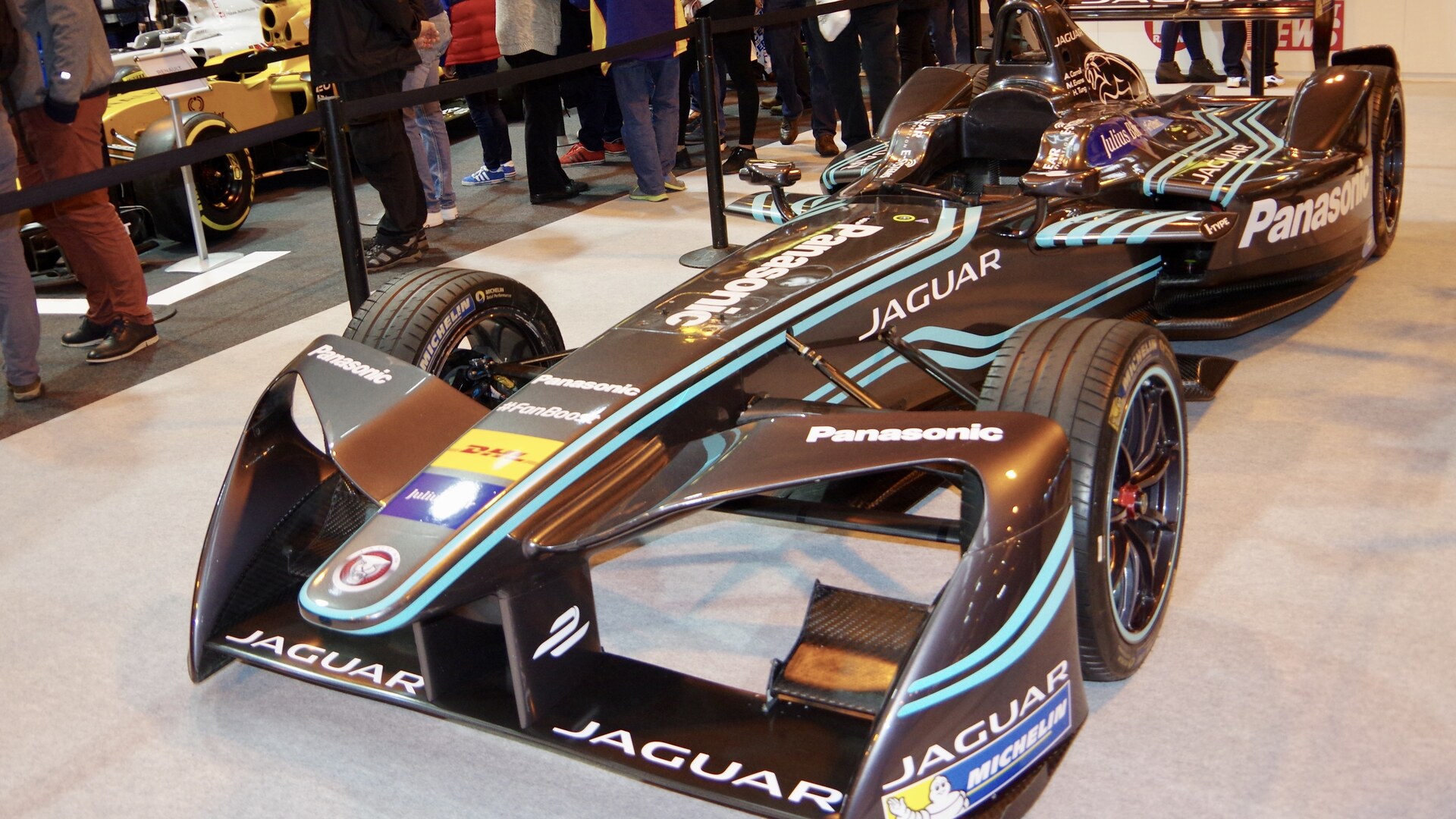
Jaguar TCS Racing’s new multi-year agreement with Elysia by Fortescue Zero is more than a supplier badge on a GEN4 car. It connects a race-team programme to software already contracted for JLR road vehicles, giving Fortescue a two-market development and sales story while giving Jaguar a clearer route from competition learning to customer-facing battery management.
The commercial structure matters because the relationship did not begin in the paddock. JLR signed a multi-year deal in May 2024 to use Elysia battery-intelligence software in its next-generation electric vehicles, starting with Range Rover Electric. JLR said the platform would monitor future EV batteries, using physics-informed digital twins and probabilistic artificial intelligence to identify battery conditions and recommend software changes.
The 10 November 2026 team agreement adds a second operating environment. Elysia becomes Jaguar TCS Racing’s Official Battery Intelligence Partner for the GEN4 Formula E cycle, with both parties positioning the programme as a way to test ideas and accelerate product development. Contract value, exact duration, software scope, engineering headcount, telemetry access and intellectual-property ownership were not disclosed.
From sponsorship asset to product evidence
For a specialist supplier, the value proposition is wider than media exposure. Elysia can place engineers alongside a factory race organisation, turn the programme into a visible reference account and demonstrate an engineering workflow to prospective automotive, heavy-industry and energy-storage customers. Jaguar can use the same relationship to support its road-car electrification narrative without building a separate partner story for racing and production vehicles.
That is a stronger business case than a conventional technical sponsorship because the road-car customer already exists. The team deal therefore sits downstream of a commercial deployment rather than acting only as a speculative lead-generation exercise. It can help Elysia retain and deepen the JLR account, create case-study material and shorten the distance between a race engineering conversation and an OEM procurement discussion.
The supplier also already has a championship-level role. Formula E lists Fortescue Zero as its Official PIT BOOST Partner, supporting 600kW rapid charging with Elysia software used to balance charging speed against battery life and integrity. Fortescue says the system delivered more than 1.5MWh across almost 400 battery top-ups in races, sessions and tests during Season 11. Those figures describe the series charging programme, not the new Jaguar team contract, but they give the partnership a relevant operating history.
The common-battery boundary
The relationship should not be read as Jaguar and Elysia jointly designing the GEN4 battery. Formula E has appointed Podium Advanced Technologies as the common battery supplier, and the FIA tender requires one rechargeable energy-storage system across the field. Manufacturers develop and integrate other systems, including powertrain, controls, cooling, brake-by-wire and energy-management software, but the cell and pack supply perimeter is controlled centrally.
That boundary makes software, modelling and operational insight the likely area of value. GEN4 raises maximum power to 600kW, regenerative braking to 700kW and usable race energy to as much as 55kWh. A race team must make decisions around deployment, recovery, temperature and reliability under compressed test and event cycles. Elysia sells a digital-twin approach intended to translate battery behaviour into decisions, while Jaguar supplies the engineering environment in which those decisions can be challenged quickly.
Neither party has said which datasets Elysia will receive, whether the work reaches the common battery system, or how any learning will be separated from confidential championship and supplier information. MRI is therefore not inferring a direct flow of Formula E telemetry into JLR customer vehicles.
What can transfer—and what still has to be proved
The transferable asset is most plausibly a method rather than a component: model validation, anomaly detection, calibration logic, charging strategy and the organisational process for turning field data into a software update. Those capabilities can be relevant to a road-car fleet even when the race and production batteries use different cells, pack architectures and duty cycles.
JLR’s 2024 announcement said Elysia would support faster charging, improved reliability, increased range, longer battery life and second-life decisions. The company’s 2025 annual report repeated that the software would be used in future vehicles beginning with Range Rover Electric. These remain company objectives. No before-and-after charging curve, degradation result, warranty reduction, safety metric or customer range test was published with the racing agreement.
Independent reporting also reinforces the distinction. Electrive described the original JLR software deal as a fleet-monitoring and digital-twin deployment, while RACER’s report from Jaguar’s 10 November launch confirmed that the I-Type 08 and Type 01 road car were presented together and that Jaguar expects the race programme to create future technology-update opportunities. Neither report supplies measured evidence that the new team partnership has already improved a production vehicle.
The operating questions for teams and suppliers
For Jaguar, Elysia and other technical partnerships built on this model, the commercial return will depend on governance as much as track performance. The parties need to define which data can be shared, who owns derived models, how race learning is separated from common-supplier information, and who carries responsibility when software recommendations influence battery operation.
They also need an evidence plan. A credible business-to-business case study should distinguish race-system metrics from road-fleet outcomes, establish baselines before deployment and publish measurable results where confidentiality permits. Without that separation, a powerful engineering story can collapse into an untestable marketing claim.
For teams, the lesson is that partner inventory can support product development and account expansion when a sponsor has a real technical workstream and an existing customer relationship. For suppliers, the lesson is more demanding: the logo is only the visible layer. The durable value lies in access, validation speed, reusable engineering knowledge and a contract structure that allows results to be sold elsewhere.
Jaguar and Elysia now have the pieces of that loop: an OEM software deployment, a factory race team, a championship charging role and a GEN4 platform with higher energy and power demands. The next proof point is not the partnership announcement. It is whether they can turn those connected assets into measured product improvement without blurring the technical and legal boundaries between them.
Sources and further reading
- Jaguar TCS Racing partnership announcement, 10 November 2026 ↗
- Fortescue partnership announcement, 10 November 2026 ↗
- JLR road-car software agreement, 21 May 2024 ↗
- Formula E Fortescue Zero partner record ↗
- Formula E GEN4 supplier and specification record ↗
- RACER independent launch report, 10 November 2026 ↗
- Electrive independent Elysia deployment report, 21 May 2024 ↗
- Licensed image record ↗