Hardee’s has renewed its partnership with 23XI Racing after the first season produced something more useful than an exposure claim: a signal from the restaurant brand’s own loyalty programme.
The quick-service restaurant chain said Bubba Wallace-themed offers for My Rewards members ranked among its most successful digital offers, while its social channels recorded increased engagement during the first year of the 23XI programme. Those company-reported results sit behind a new multi-year agreement that keeps Hardee’s as a primary partner of Wallace and the No. 23 Toyota at selected NASCAR Cup Series races.
The 8 October announcement does not disclose the contract value, expiry date, number of primary races, redemption totals, sales uplift or the baseline used for the social comparison. The available evidence therefore cannot show a return on investment. It does show the commercial logic of the renewal: team rights were connected to an identifiable customer action inside a platform controlled by the sponsor.
For teams and rights holders, that distinction matters. A logo impression can demonstrate reach, but a loyalty offer can record when an enrolled customer views, claims and redeems a promotion. Hardee’s can then compare the activity with other offers in the same system. The renewal suggests that the motorsport programme cleared an internal relevance test even though the company has not published the numbers.
League and team rights perform different jobs
Hardee’s holds two separate layers of NASCAR inventory. It became the Official Quick Service Restaurant of NASCAR in January under a multi-year agreement, giving the brand championship-level assets and a route to event-wide activation. At the same time, it joined 23XI as a primary partner of Wallace and the No. 23 team.
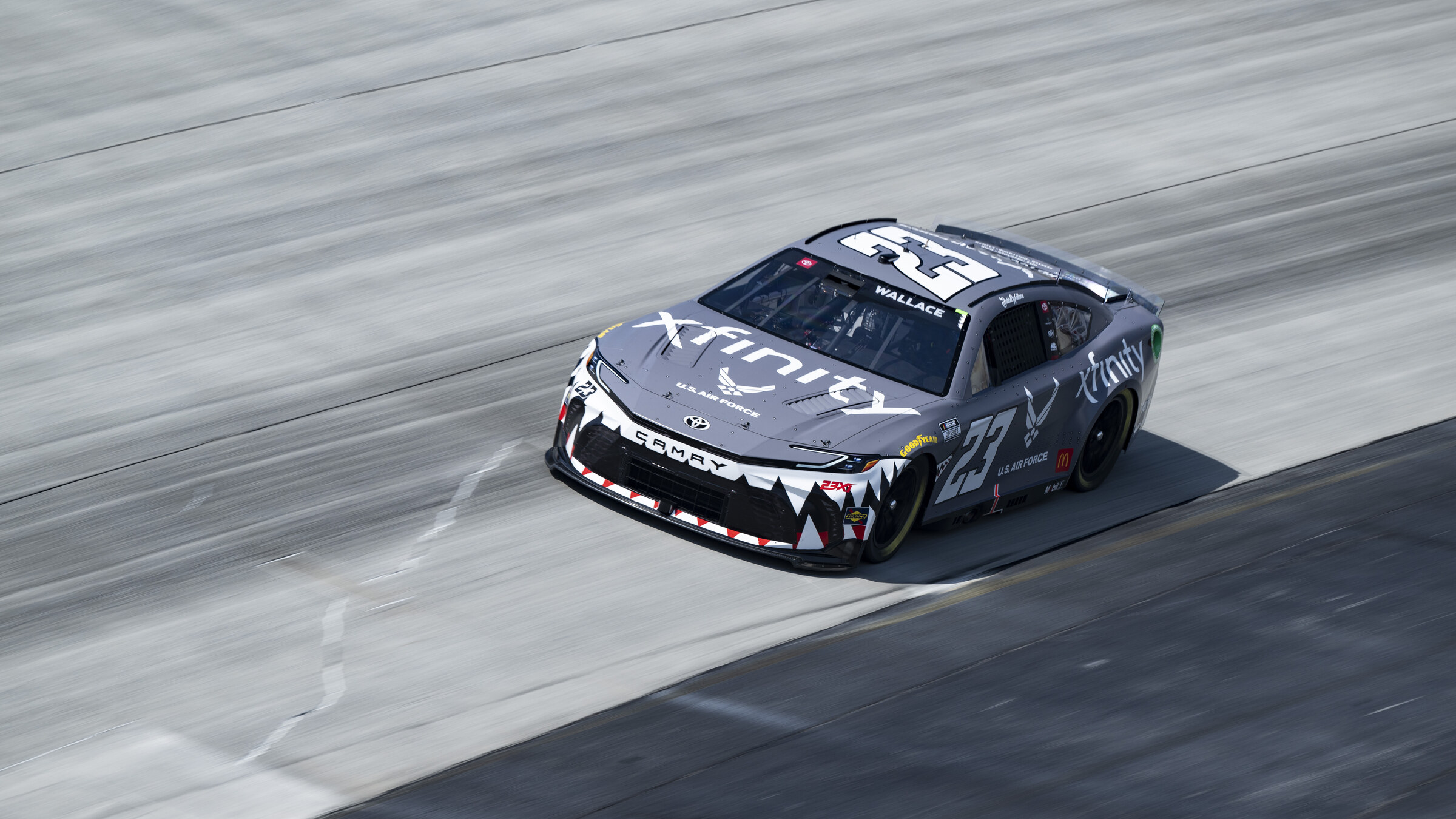
The renewal covers the team layer. Hardee’s branding will remain on the car at selected races and on the No. 23 team’s uniforms and equipment and Wallace’s race suit throughout the season. That combination provides concentrated visibility when Hardee’s is the primary livery and a lower but persistent presence at other events.
The two rights packages are complementary rather than interchangeable. NASCAR can authorise use of championship marks, supply national event inventory and connect the brand to the wider fan base. 23XI can build content, appearances and products around a specific driver, car and team identity. Wallace gives the offer a recognisable person; the No. 23 gives it a physical design that can become merchandise.
For sponsors, the structure is a reminder that buying more rights is useful only when each layer has a defined role. Championship rights can create legitimacy and scale. Team rights can create narrative and targeted activation. The value comes from designing one customer journey across both contracts, not from counting the same fan twice in two audience reports.
No source explains how Hardee’s divides spending, measurement or approval responsibility between NASCAR and 23XI. It is also not known whether the contracts have matching terms or whether performance under one agreement influences the other. MRI is not combining the two deals into a single undisclosed package.
The collectible turns attention into a transaction
The renewal promotion shows how the rights can be converted into a retail mechanic. From 8 October to 10 November, registered My Rewards members can receive a collectible No. 23 Hardee’s die-cast car with a qualifying purchase of at least $15 at participating locations, while supplies last.
The published terms allow redemption through the app, the Hardee’s ordering site or an in-restaurant scan and limit the offer to one redemption per registered user per day. That design makes the race-team asset contingent on both membership and a transaction. It can support loyalty enrolment, increase the value of a visit and give the sponsor a redemption record linked to its own system.
The die-cast also extends the life of the activation. A food discount disappears when the meal is consumed; a numbered race-car object can remain on a desk or shelf. The item carries the team and driver identity into the customer’s environment and gives the transaction a scarcity element because supply is limited.
Hardee’s used a similar product-and-menu combination during the first season through the Bubba Wallace Full Throttle Meal and an exclusive No. 23 collectible. The renewal promotion therefore repeats a known operating pattern rather than introducing an untested category.
That repeatability is valuable for a team. The race programme can supply new moments—driver milestones, a birthday, a livery reveal or a key event—while the sponsor reuses an established commercial framework. Creative work and inventory still change, but the redemption, ordering and measurement systems do not need to be invented for every race.
The caveat is that the announced ranking is relative and incomplete. “Among the most successful” does not reveal the size of the customer group, incremental revenue, acquisition cost, margin after the premium or whether buyers would have visited without the offer. A collectible can shift the timing of an existing customer’s purchase without creating a new customer. Hardee’s has not published a control group or an incrementality study.
First-party measurement changes the renewal conversation
Motorsport sponsorship has traditionally relied on media-equivalent value, broadcast visibility, hospitality use and brand research. Those measures remain useful, but they often sit outside the sponsor’s core commercial systems. A loyalty activation moves at least part of the evaluation into the same environment used for ordinary restaurant marketing.
That gives the brand a common benchmark. Wallace offers can be compared with product launches, seasonal discounts and other partner campaigns using the sponsor’s own definitions. The renewal announcement’s decision to cite the internal ranking—rather than only impressions or follower growth—signals that the programme is being discussed in commercial terms familiar to the wider marketing organisation.
Teams selling sponsorship should note the implication. The strongest proposal may not promise a standalone “motorsport ROI” formula. It may show how racing assets can plug into an existing customer-data, commerce or dealer system so the buyer can evaluate the campaign using measures it already trusts.
That requires work before the first logo appears. The team and sponsor need unique offer codes or campaign identifiers, agreed activation windows, creative approvals, a content calendar and a reporting timetable. They also need a clear definition of success: enrolments, redemptions, average order value, reactivation, repeat visits or another outcome.
The Hardee’s announcement does not say which measures governed the renewal. It also does not say that 23XI or NASCAR receives customer-level information. Loyalty data held by the restaurant brand should not be treated as shared team data without explicit evidence. Rights agreements need to distinguish aggregated campaign reporting from access to personally identifiable customer records.
Franchise execution is part of sponsorship delivery
Hardee’s says it has more than 1,600 franchised or company-operated restaurants across 31 states. That footprint gives the NASCAR platform commercial reach, particularly when an offer can be redeemed digitally or scanned in a restaurant. It also makes execution a supply-chain and franchise-management task.
A national collectible programme needs enough inventory in the right markets, packaging that protects the product, clear point-of-sale instructions and systems that recognise the offer. Participating locations need to understand eligibility and stock rules. Customer support needs an answer when an app records a qualifying transaction but the restaurant has run out of cars.
Those details sit outside the race team, yet they determine whether the sponsorship creates a positive customer experience. A fan may associate a failed redemption with Hardee’s, Wallace and 23XI at the same time. Activation planning therefore has to connect the team’s commercial department with the sponsor’s digital, procurement, franchise, fulfilment and customer-service functions.
For suppliers, this creates work beyond car branding. Licensed collectibles need design approval, manufacturing, quality control, delivery forecasting and rights clearance. Digital agencies need to connect creative assets with app journeys and analytics. Local operators may need campaign materials and training. The race property becomes an input to a distributed retail programme.
The disclosed promotion does not identify the die-cast manufacturer, production quantity or distribution method. It also does not say who carries unsold inventory or the cost of replacement stock. Those are material commercial questions for any team proposing a similar premium-led activation.
Renewal is evidence, not full disclosure
Independent coverage confirms that the extension begins in 2027 and continues for multiple years, with the brand retaining selected primary races and season-long team inventory. It also confirms the loyalty-linked collectible offer around Wallace’s birthday and the Charlotte race weekend.
The agreement is meaningful because a sponsor that entered the team this season has committed again after observing its own campaign performance. It should not be overstated. No audited outcome, rights fee or profitability measure is public, and the number of future primary events remains unknown.
The next useful evidence will come from activation rather than another partnership release. Hardee’s can show whether the new promotion adds members, lifts order value or produces repeat behaviour after the collectible window closes. 23XI can show whether the programme expands into retail content, hospitality, community activity or new sponsor-to-sponsor collaboration. Neither outcome is guaranteed by the contract alone.
For motorsport businesses, the practical lesson is already visible. Rights become easier to renew when they create a traceable action inside the sponsor’s normal commercial infrastructure. NASCAR provides the broad platform, 23XI and Wallace provide the identity, and Hardee’s converts that identity into an offer it can measure in My Rewards.
The logo remains valuable, but it is no longer the end product. In this programme it is the front door to a customer transaction—and that is a stronger basis for a multi-year renewal than visibility alone.