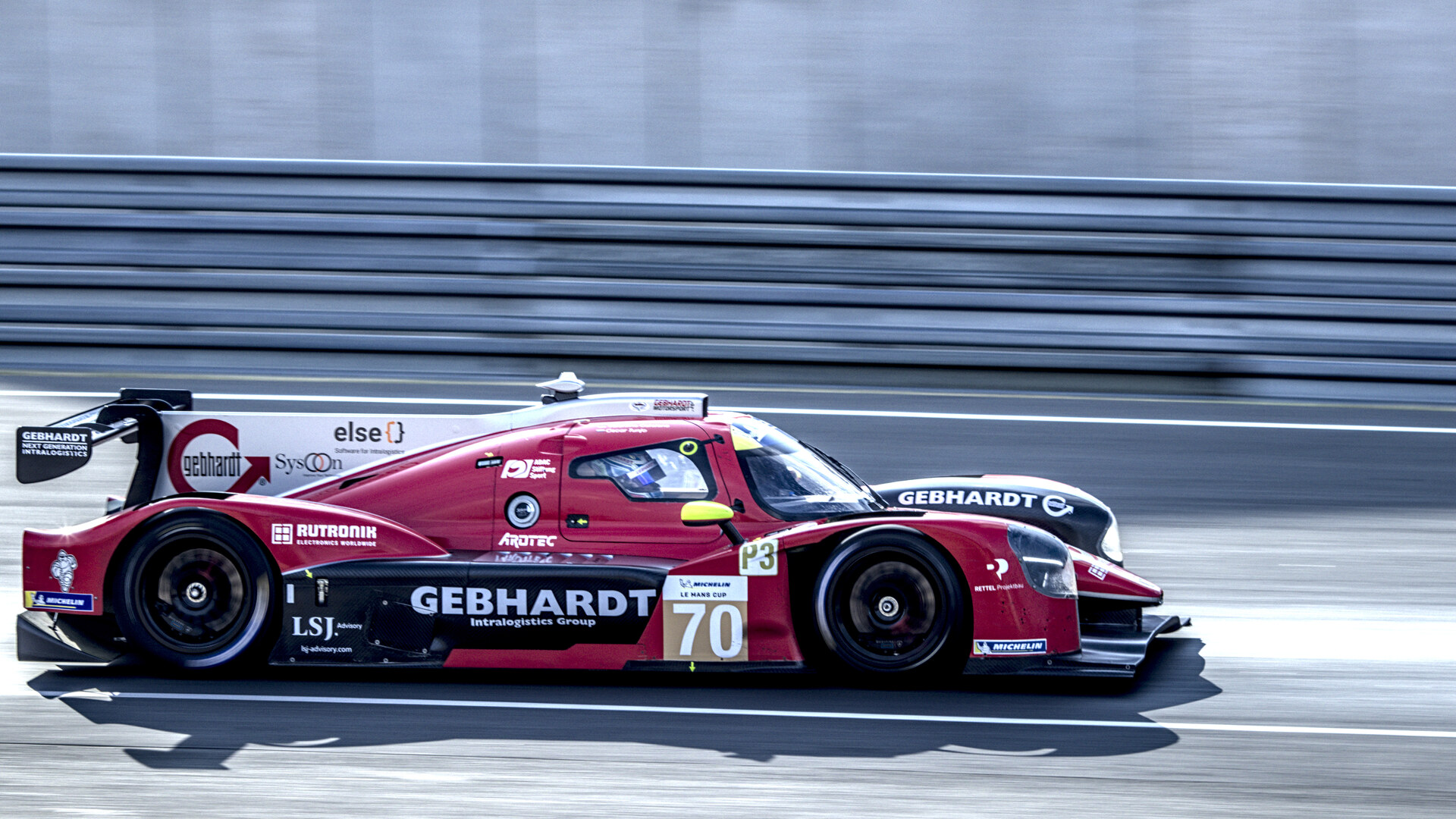
Duqueine Automotive has made a distribution agreement part of its North American growth strategy, appointing Memphis-based Forbush Performance to put parts, customer service and race support closer to IMSA teams.
The 14 October 2026 agreement makes Forbush Duqueine's official North American distributor. Forbush will hold parts in the United States, support customers and provide trackside service, while Duqueine plans to send a factory representative from France to every IMSA VP Racing SportsCar Challenge round in 2027.
Forbush will also continue racing its No. 18 Duqueine D09 and maintain the personnel and equipment required to field a second car for a customer seeking a turnkey programme.
Taken together, those commitments create more than a reseller relationship. They place inventory, engineering access, operational capacity and a live demonstration programme inside one regional hub. For teams and suppliers, the important question is whether that structure can turn the D09's results into repeatable customer revenue.
Local stock changes the cost of running a customer car
Prototype manufacturers do not compete only on lap time or the purchase price of a chassis. A customer also buys the availability of bodywork, suspension components, cooling hardware, electronics, consumables, setup knowledge and technical answers throughout a season.
When those resources sit on another continent, every damaged or life-limited component carries extra uncertainty. Freight time, customs processing, time-zone differences and limited emergency inventory can turn a routine repair into a missed session. A local distributor can reduce that exposure by forecasting demand, holding critical stock and coordinating deliveries around the calendar.
Duqueine says Forbush will provide domestic parts availability for the D08 and D09 platforms, including parts for the M30 from which the D08 was developed. The parties have not disclosed the opening inventory value, minimum stocking levels, warehouse service targets or who carries the working-capital risk.
Those omitted terms will determine how much the appointment changes customer economics. A distributor name alone does not shorten lead times. The commercial advantage appears only if the right parts are in Memphis before teams need them and if the support organisation can identify, pick and move them quickly.
Forbush therefore becomes part of the product. A prospective customer will assess not only the D09 but also parts fill rate, response time, technical depth and the cost of trackside assistance. Duqueine's North American proposition is now inseparable from the distributor's execution.
IMSA's endurance reset raises the service requirement
The timing is deliberate. IMSA will move the VP Racing SportsCar Challenge to an all-endurance format in 2027, with seven events lasting from 90 minutes to three hours.
Longer races change the operating burden. Teams need more robust pit procedures, driver-change capability, refuelling and tyre planning, component-life control and recovery options when a car suffers damage or a systems fault. The value of a nearby spares pool and a factory-supported engineer rises when a problem must be solved during a multi-hour event rather than between two short sprint races.
The schedule also spreads demand across seven venues, from Sebring and Barber to Watkins Glen, Road America, Road Atlanta and Lime Rock. The distributor must turn a fixed warehouse into a mobile service operation. Transport planning, event stock, return-and-repair processes and technical documentation become as important as the address of the parts shelf.
Duqueine has committed to a factory representative at every round. That provides a direct channel to engineering in France, but one person cannot replace a complete regional support system. The factory and distributor will need clear escalation paths, remote data access, spare-equipment plans and authority to make decisions when several customers require help at once.
For suppliers, that creates a practical opportunity. Local machining, composite repair, freight, storage, test equipment, data systems and specialist labour can all sit around the distributor's core inventory. Duqueine has not announced those contracts, so businesses should treat them as potential work packages rather than awarded business.
Forbush is both the showroom and the sales desk
Forbush enters the agreement with current operating experience. Its No. 18 D09 won both VP Racing Challenge races at Road Atlanta in October with Duqueine Academy driver Jules Caranta, and the team plans to continue the programme in 2027.
That gives prospective customers a working reference. They can see how the car is prepared, how the team uses factory support and what a complete programme requires. Forbush can sell from its own experience rather than from a specification sheet.
The planned second-car capacity shortens the path from interest to participation. A customer does not necessarily need to buy equipment, recruit a full crew and build an operating base before entering. The distributor can offer a managed route in which the car, personnel and technical structure are already assembled.
This is a useful customer-acquisition funnel. A driver or entrant can begin with a turnkey programme, learn the platform and later decide whether to remain with Forbush or operate independently. Duqueine gains another car on the grid either way, while Forbush earns revenue from running the programme or supplying the resulting independent team.
The dual role also needs governance. A distributor that races against its customers may hold setup information, parts demand and performance data that those customers regard as sensitive. It may face competing claims for the same scarce component during a race weekend.
Fair allocation rules, data separation and transparent service terms will matter as the customer base grows. What works for one house car and one client can become contentious with several teams chasing the same championship.
The agreement converts a chassis sale into recurring revenue
Customer-racing manufacturers earn at several points in the life of a car. The initial chassis is only the first transaction. Spares, rebuilds, updates, engineering, training and event support create the recurring relationship.
The new structure gives Duqueine a regional channel for each of those transactions. It also gives Forbush multiple revenue lines: distribution margin, technical service, trackside support and complete race operations.
That diversification can make the market easier to serve. Chassis orders are irregular and capital-intensive, while parts and support demand recur through the season. A distributor that combines both can use the recurring work to sustain staff and infrastructure between new-car sales.
No party has disclosed the contract duration, territory exceptions, exclusivity, margin structure, sales targets or service pricing. It is therefore not possible to quantify the revenue transferred to Forbush or the investment required from Duqueine.
The agreement should be judged by the installed base it creates, not by the announcement itself. Useful measures include the number of active Duqueines in North America, new chassis delivered, repeat parts revenue, average lead time, event-service utilisation, second-car bookings and customer retention.
Race results can support demand, but they are not a sales ledger. Duqueine says its cars achieved eight IMSA LMP3 wins, nine poles and 22 overall podiums in 2026, with the D09 winning both the Sprint and overall class titles. Those figures establish performance credibility; they do not show how many customers are ready to buy.
Common components shift competition toward service
LMP3 is designed around cost control and common technical elements. The Automobile Club de l'Ouest selected Oreca's twin-turbo V6 package for the 2025-2029 homologation period and retained the existing chassis manufacturers.
That framework limits some areas of differentiation. Manufacturers still develop their own chassis and bodywork, but teams operate within a category built to contain cost and performance variation. When headline performance converges, availability, ergonomics, repairability, documentation and support become more visible purchasing criteria.
Duqueine's North American move reflects that reality. It does not alter the D09 homologation or create a new technical specification. It changes the service wrapper around the car.
For teams, this can reduce total operating risk even if the chassis price is unchanged. For a manufacturer, the service network can defend market share without relying on continual product changes. For a distributor, technical competence becomes a commercial asset rather than an after-sales obligation.
The model is especially relevant to smaller constructors. Building a full factory subsidiary in every market would tie up capital and management attention. Partnering with an established entrant places local capability closer to customers while keeping the manufacturer involved through factory engineering.
The trade-off is control. Duqueine's brand in North America will depend on Forbush's stock decisions, communication, service quality and treatment of rival teams. The factory needs enough visibility to protect the customer experience without duplicating the distributor's role.
A regional hub needs measurable service levels
The first test comes before the 2027 season begins. Teams will want to know which components are stocked, how orders are placed, which services are included at events and what happens when an item is unavailable.
A credible support offer should distinguish standard inventory from emergency inventory, publish ordering cut-offs and provide an escalation route for safety-critical or race-stopping issues. It should also explain repair exchange, warranty handling, crash-damage assessment and the return of used components.
Trackside service needs similar clarity. Customers need to know whether the factory representative advises every Duqueine entrant, works through Forbush or is allocated by priority. Engineering access should not become an informal benefit available only to the house team.
Digital systems can help. Shared parts catalogues, serial-number tracking, service bulletins and component-life records give the manufacturer a view of fleet demand and give customers evidence that maintenance is current. Demand data can also prevent the distributor from tying up cash in slow-moving stock while running short of critical items.
The opportunity for Duqueine is to create a feedback loop. Forbush sees failures, wear patterns and customer questions in the field; the factory sees engineering data and the wider global fleet. If that information moves quickly in both directions, the distributor can improve local service and the manufacturer can improve documentation, stocking and future product decisions.
What teams and suppliers should watch
The appointment removes one barrier to buying a Duqueine in North America, but it does not by itself guarantee additional entries.
Teams should seek detail on parts pricing, availability, service coverage, data access and the boundary between distributor and factory responsibility. Customers considering the turnkey second car should separate the cost of the chassis from crew, testing, transport, crash damage and event support.
Suppliers should watch for evidence that the hub is scaling: recruitment, warehouse expansion, transport capacity, new technical partners and confirmed customer programmes. Those signals are more meaningful than a broad statement of market ambition.
IMSA also matters. A stable seven-event format, clear sporting rules and sufficient grid demand will determine whether entrants commit for multiple seasons. The all-endurance schedule creates a stronger service requirement, but it can also raise programme cost compared with sprint racing.
For Duqueine, success would mean more than selling a second car. It would mean proving that a manufacturer can localise support without building a full subsidiary, while preserving consistent engineering and customer treatment across a continent.
The strategic shift is simple: the North American sales proposition is no longer only a French-built D09. It is a car, a Memphis parts operation, trackside service, factory engineering and an optional race team sold as one operating system.
That is the product customers will evaluate in 2027.
Sources and further reading
- IMSA official announcement, 14 October 2026 ↗
- IMSA 2027 all-endurance format announcement, 11 July 2026 ↗
- IMSA 2027 VP Racing SportsCar Challenge schedule ↗
- Duqueine 2026 IMSA championship record ↗
- ACO LMP3 engine and homologation announcement ↗
- Sportscar365 independent report, 14 October 2026 ↗
- Wikimedia Commons image record ↗